AAP Report in Melbourne Age. August 29 2008 ( I wrote this a while ago before I started this blog – the facts are still valid – as facts always are. )
So wherever I am, there’s always Pooh,
There’s always Pooh and Me.
‘What would I do?’ I said to Pooh,
‘If it wasn’t for you,’ and Pooh said: ‘True,
It isn’t much fun for One, but Two
Can stick together,’ says Pooh, says he.
‘That’s how it is,’ says Pooh, says he.
‘That’s how it is,’ says Pooh.
(A.A.Milne- Now we are Six)
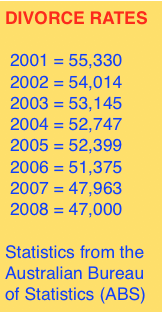
Although this was written in 2014 we have chosen these years for reasons which will be clear from the article.
Pooh is right. It is much more fun when there are two, and, as Pooh further points out – mutual support is an additional bonus. Since 1973 civil celebrants have established dignity in personalised marriage ceremonies. From the same time period, the Australian Family Law Act has injected relative dignity to the legal sealing of a relationship break-up.
If you disagree with my propositions – you simply haven’t lived long enough.
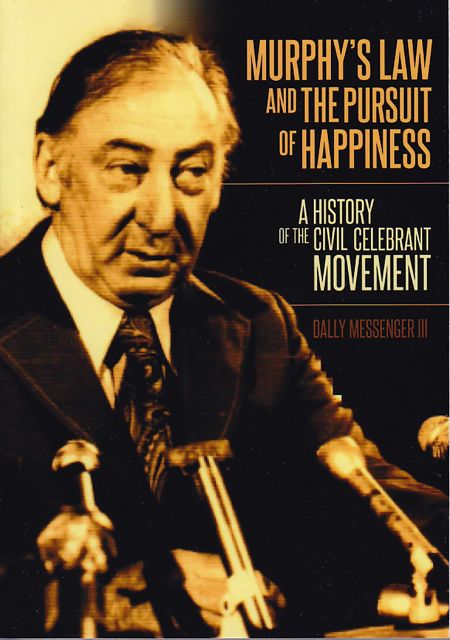
When Attorney-General Lionel Murphy battled his heart out to take the unnecessary pain and expense out of fault-and-blame divorce laws, and set in train a system to bring dignity and meaning into marriage ceremonies, I, for one, knew that, sooner or later, the good effects must become apparent.
Australia is unique in all the world. Except for New Zealand, who followed the Murphy principles in some ways better than we did, the Australian Civil Celebrant has injected something special and unique into the Australian cultural scene.
There would be few who would disagree that in the 1960s and 70s many marriages in the Christian churches were inherently dishonest, and most marriages in the Registry Offices were a humiliation. Those who did marry were mainly driven by convention, very few by the personal conviction that they needed a solemn ceremonial commitment. The institution of marriage was seen by leading feminists, for example, as a state in itself oppressive to women.
Those young women who didn’t go that far, saw themselves as choosing between a marriage ceremony, where the male was clearly spiritually superior (and they were inferior), or a civil marriage in a Registry Office. The latter would take place before a poker-faced official – the legal words lasting, at the most, a minute. These “marriage ceremonies” took place on weekdays only, with only two witnesses allowed. Most saw this as an event no even partially sensitive person should have to face.
 As a corollary to this, divorce laws were obscenely expensive and totally legally dishonest.
Lionel Murphy, acting almost alone, did away with all this. He gathered around himself a group of people, among which I proudly number myself, whom he asked to bring dignity, meaning and culture back into the non-church marriage ceremony.
To those few who understood his visionary explanation, it was alarming and radical. What? Couples designing their own ceremony? What? Couples choosing their own place and time? What? Couples choosing their own celebrant? No, no, Lionel! The church or the public servant decide the ceremony, the officials decide the words and the place, the common people should do as they are told — if they want to be married.
Now, in 2009, we are all familiar with the repercussions of those dishonest and humiliating marriage ceremonies. I doubt if there is any country in the world where people live together in de facto relationships to the extent we do in Australia.
Not quite noticing that the scene had began to improve, and as time went on, these de facto couples demanded that that they be treated the equal of people who had been through a ceremony. The politicians acquiesced. The Democratic clamour of the people had to be recognised. What was a marriage ceremony anyway ? Just some froth and bubble — some mumbo-jumbo — a few words that entitled you to a piece of paper!
In contrast, followers of the Lionel Murphy vision believed that ceremonies are a valuable means of deep psychological orientation — and we should have them all the time – for every milestone in life. They are an essential means of personally serious and public communication. The “Sorry Ceremony” last year was a class example. The word “Sorry” in a ceremonial context changed people’s lives, reduced them to weeping, recognised and released pent up years of pain, and validated interior screaming. But the “Sorry Ceremony” was contentious. “Mere words” said one group. “Only actions mean something”. The philosopher rose up and said, “but words are actions”.
And then, last year, Barack Obama was made President of the United States. If he hadn’t had a ceremony, he would still be President of the United States. So why did he have one? What difference did it make? But he did have a ceremony — thousands gathered in Washington DC from around the world. Millions watched the ceremony on TV. It was a spellbinding event; it had great meaning. His choices of music and poetry and songs — his choice of speech words and vows were the “roadmap” (to use a modern concept) for his presidency.
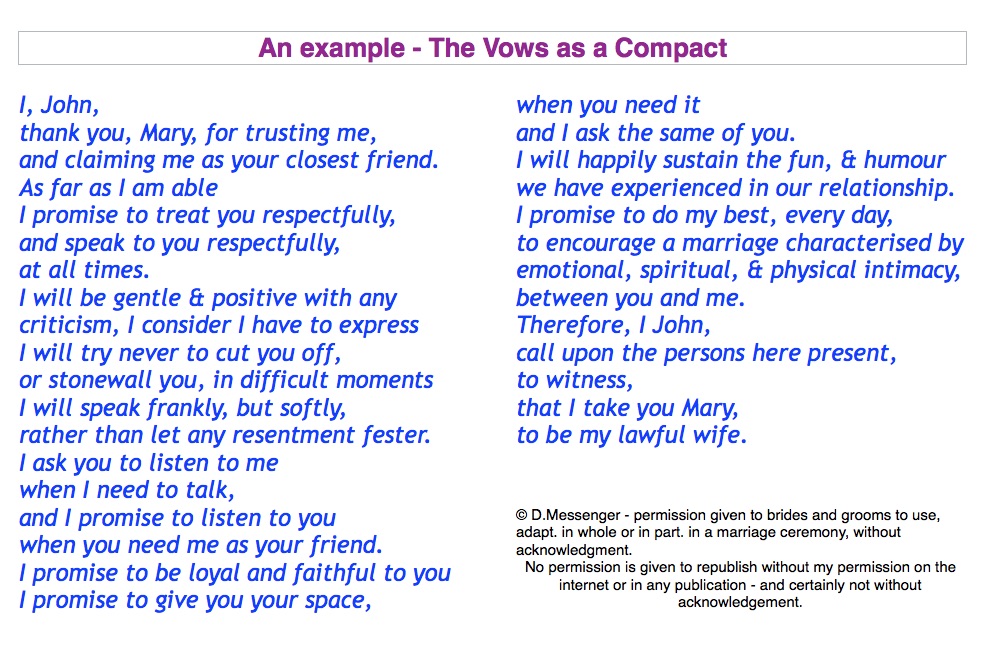
In the same way a marriage ceremony can be, and ought to be, and so often now is, a “roadmap” . It sets out a couple’s commitment to attempt to establish a fulfilling, happy and positive relationship. With the assistance of a civil celebrant who “gets it” the couple can make a compact. They can exchange vows which abjure contempt, renounce stonewalling, modify defensiveness, and envelop criticism in kindness. Couples can declare equality, honesty and open communication. They can promise to express love, re-assurance, and support. They can (as Bettina Arndt proposes they do) seriously commit to maintaining a life of intimacy at every level.
Marriages up, divorces down, the ghost of Lionel Murphy will be smiling.
Dally Messenger III
Editors Note: In 2003 the Civil Marriage Celebrant program was seriously downgraded. In blunt terms the government passed the administration into the hands of a public servant (The Registrar). They have since appointed 10,500 celebrants when 2000 would have been more than enough for Australia – with predictable results and a deterioratiing marriage/divorce scene.



 International College of Celebrancy (Est.1995)