“Besides, there are a hundred things one has to know,
which we understand all about and you don’t, as yet.
I mean passwords, signs, and sayings which have power and effect,
and plants you carry in your pocket, and verses you repeat,
and dodges and tricks you practise;
all simple enough when you know them,
but they’ve got to be known… “
Rat to Mole in The Wind in the Willows

In Module 2, Ceremonial Public Speaking, Organisation and Choreography, we give the student a grounding and awareness of the essential practical skills needed by a successful celebrant. And there are certain principles of organisation and structure that are common to the creation and co-creation of any personal ceremony.

PART 1: SPEECH AND DELIVERY
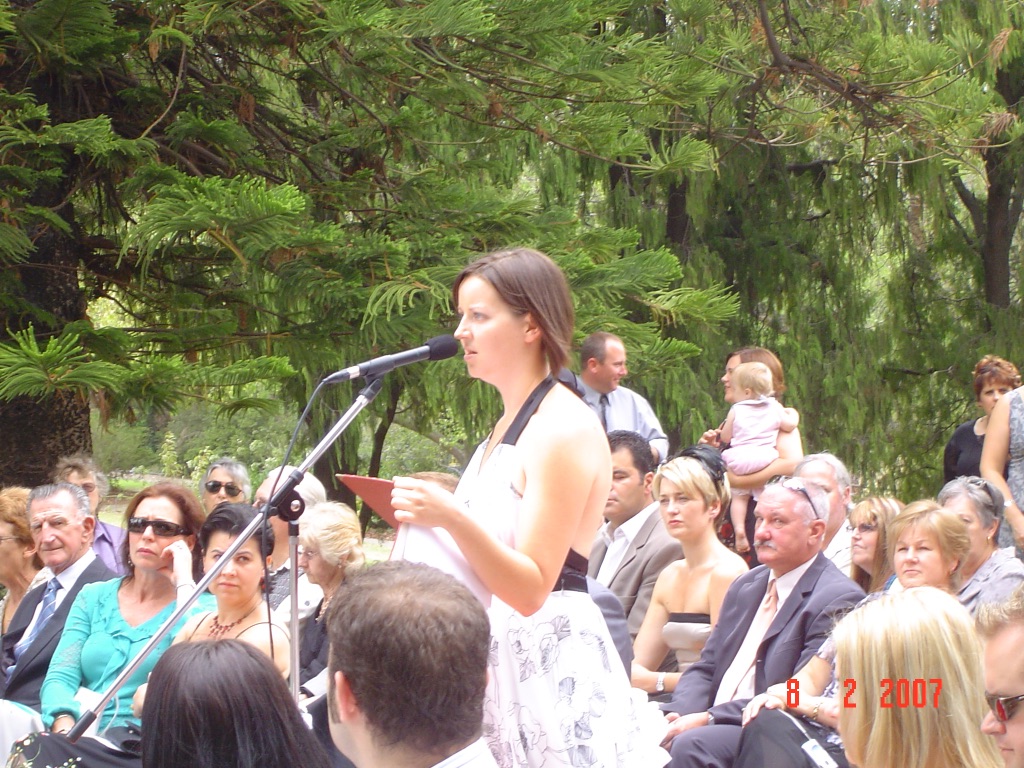
Of all the necessary celebrant skills, and there are many, the one most obvious to the audience is the ability to speak clearly and pleasingly. Mostly, this includes the technical skill of using a microphone and PA system so it not only enhances volume but also clarity. The PA system has to be of good quality and used to its best effect. The celebrant must develop a good “feel” for the ceremonial pace of speaking. At the rehearsal, the celebrant has the task of diplomatically coaching the other participants in the ceremony to the extent they too are “heard, understood, and appreciated.” These are just some of the ‘up-front’ skills of the celebrant, which are difficult to teach by distance education, however we do it!
To ensure the desired outcome, the college arranges for a qualified voice coach (usually your tutor) to first assess and recommend exercises and finally examine the student. This person is then required to certify the student:
- can project the voice to a gathering of, say, 70 people in the open air and
- has clear diction and knows exercises, including breathing exercises, for sustaining clarity and audibility.
The student will learn how:
- to read poetry and prose with competence, due understanding, inflection, and emphasis. A celebrant should have the interpretative skills, personal aptitudes, technical skills, and voice management ability to read and speak competently, i.e., the elements of voice and speech that effectively transmit thought, mood, and feeling.
- to set up a portable PA system for the celebrant and readers, then use the system competently with appropriate microphone techniques.
- to adapt to a variety of PA systems, such as those found in reception centres, funeral parlors, and other venues
- The needs of ceremonial audiences differ from those of other audiences
PART 2: – ORGANISATION
The celebrant needs to have a grasp of the details necessary in the preparation for and performance of a good ceremony, as well as the pitfalls and hazards.
From real-life examples, we introduce ideas on how to:
- handle enquiries
- structure interviews
- use listening skills and the importance of them
- understand the signals of body language
- understand your client and their background
- work out the resources to suggest for music and poetry
- prepare and dialogue about a ceremony
- implement guidelines to ensure the “mechanics” of the ceremony create the right atmosphere and communicate the intent of the ceremony clearly
- organise a rehearsal and understand its importance.
- be aware of the importance of attending to a myriad of organisational details to ensure the ceremony itself goes well
- organise a gathering so guests are brought together so they are a part of the ceremony.
- resolve conflict and ease tension
- and so much more
PART 3: CHOREOGRAPHY
The celebrant needs to rehearse and orchestrate the movement and the choreography of the ceremony so it flows in a manner that enhances the occasion for all present. To have impact, the ceremony must have “flow,” yet the discrete pericopes of the ceremony must be cleanly delineated, e.g., the Monitum must be separate from a Reading, Vows must be separate from the Giving of Rings and much more. The celebrant must know where to stand or sit and must ensure that the wedding party knows where to move and when they must do so in unison, etc. And much more!
Assessment
Assessment tasks are on the last few pages of the module manual. All assessment tasks are carefully read, critiqued, and assessed by your designated tutor.
Assessment is done by the following methods:
- Learning Journal – a diary relating your studies to the world in which you live, includes compulsory research and writing tasks where necessary.
- Research questions based on selected written material provided with the module manual, books, videos, and website links.
- Fieldwork –
1. assessment by your tutor or voice coach.
2. analyse the unique nature of ceremonial partcipants and audiences. - Literature Review—of supplied texts.
Workload and Due Dates
The time envisioned for working on each unit is equivalent to 10 weeks at 8 hours per week. The college has not set dates for submission of individual items. However, unless special permission to extend is granted, this module is to be completed within 6 months. Temporary suspensions of enrolment are negotiable; however, fees for modules that have not been completed are not refundable.
Please note carefully: RPL (credit) IS RARELY GIVEN FOR THIS MODULE
The aim of this module is to communicate basic ideas and raise awareness of the student’s capabilities. A detailed assessment by a qualified voice coach should make the student aware of their strengths and weaknesses in the vital areas of speech, voice, and presentation. It may be that by practising certain exercises, a student with poor voice quality may come up to a competent level. If substantial private coaching is required to achieve this competence, it must be pursued at the student’s expense.
Readings, Questions and Assignments
All manuals and videos are provided, including “Ceremonies and Celebrations” if not previously provided, and will be made available immediately once the college receives full payment for the module. The module manual, books, videos, and other items are downloaded from links we will send you. Some items may be sent by post. Transferring any material belonging to the college to a third party without prior permission is unethical and strictly forbidden.
Contact us—persons to talk to, phone numbers, and email addresses.
Related
- The Enrolment Form
 International College of Celebrancy (Est.1995)